
Inman's Alleged 1989 Remark on Recovered Vehicles Revives...
1 day ago • 21 views
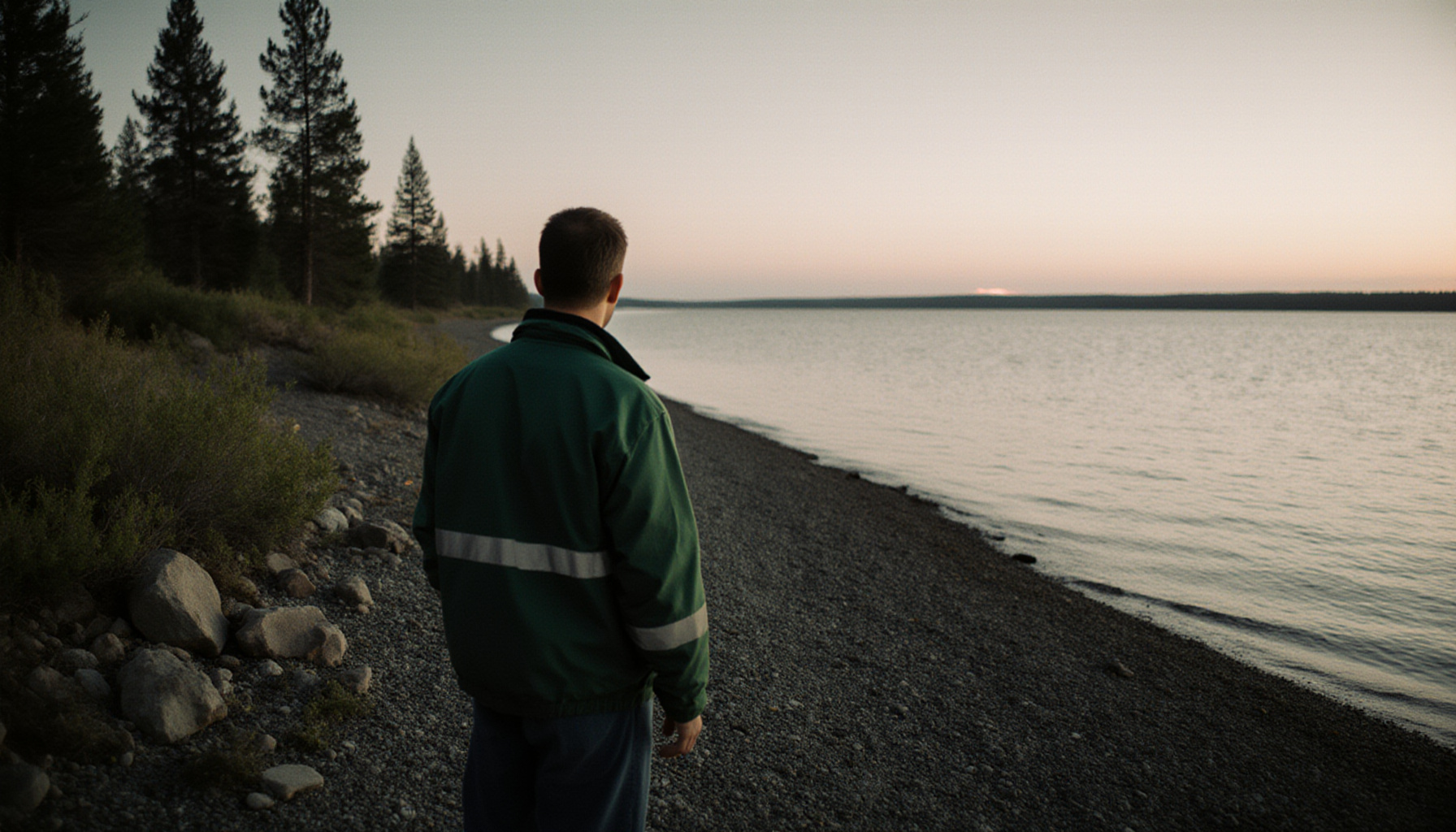
Jesse Michels interviews Steve Aspin on family-linked abductions and his father's death. We place it beside Falcon Lake, Nuremberg, Inman and a Peru account.
A recent episode of the American Alchemist channel has Jesse Michels interviewing Steve Aspin about UFO encounters, the idea of familial abduction patterns, and an unexplained experience involving Aspin's deceased father. The discussion centers on a question that runs through much of experiencer research: if encounters happen, do they cluster in families? The material available to us is a short summary of the interview, so what follows describes the claims as presented and does not verify them.
According to the description, the conversation covers three things: Aspin's own encounters, the notion that abduction experiences may recur across relatives, and a puzzling event tied to his late father. We have no transcript, so we can't characterize the specifics, and we won't guess at them. What matters analytically is the framing. Familial patterns shift the claim from a single anomalous event to a hereditary or recurring one, which is much harder to test. A one-off sighting can sometimes be checked against radar, weather or aircraft records. A pattern running through a family relies mostly on testimony, memory and shared belief, all of which can influence one another within a household.
That is not a reason to dismiss the account. It is a reason to separate what is being reported (a person's experience and interpretation) from what has been demonstrated (nothing, so far, in the material provided).
The other items in this week's coverage show how different types of claims carry different weight.
Taken together, these span a spectrum: communal observation, a witness with recorded physical effects, and personal experiences with no external corroboration mentioned. Aspin's account falls in the last category, at least as summarized.
One item stands apart because it concerns official knowledge rather than a witness. Admiral Bobby Ray Inman allegedly admitted in 1989 that recovered vehicles were studied by the military, but later denied UFO recoveries in an interview. The word allegedly matters here. We have a reported statement and a later denial, and the material doesn't tell us how the original remark was documented or what context surrounded it. The contradiction is itself the story: it shows how hard it is to settle questions of government knowledge from secondhand recollection.
When a claim rests on memory, whether a witness's or an official's, the later denial or revision can matter as much as the original statement.
Reading these stories side by side clarifies what a serious reader should ask of each. For Aspin's interview, the useful questions are: who else in the family reports experiences, were accounts recorded independently, and what exactly happened with his father? For Falcon Lake, the question is how researchers tied the injuries to the event. For Nuremberg, it is how much of the 1561 description reflects the observers' vocabulary and era. For Inman, it is what was actually said, and where. For Peru, it is whether anything beyond the witness's statement exists.
None of these can be answered from the summaries alone. But the exercise is worthwhile: the field's credibility depends on distinguishing a compelling narrative from a corroborated one. The Aspin interview is worth watching as a window into how experiencers understand recurrence in their own lives. It should be weighed as testimony, and we will report if further documentation emerges.
Originally published by
Editorial Desk
Article ID
#2356
Join the discussion about this UFO/UAP story!
1 day ago • 21 views

1 day ago • 37 views

2 days ago • 27 views

2 days ago • 63 views
Loading comments...
No comments yet. Be the first to share your thoughts!