
Book of Enoch and the Watchers Re-enter the UFO Debate as...
18 hours ago • 28 views
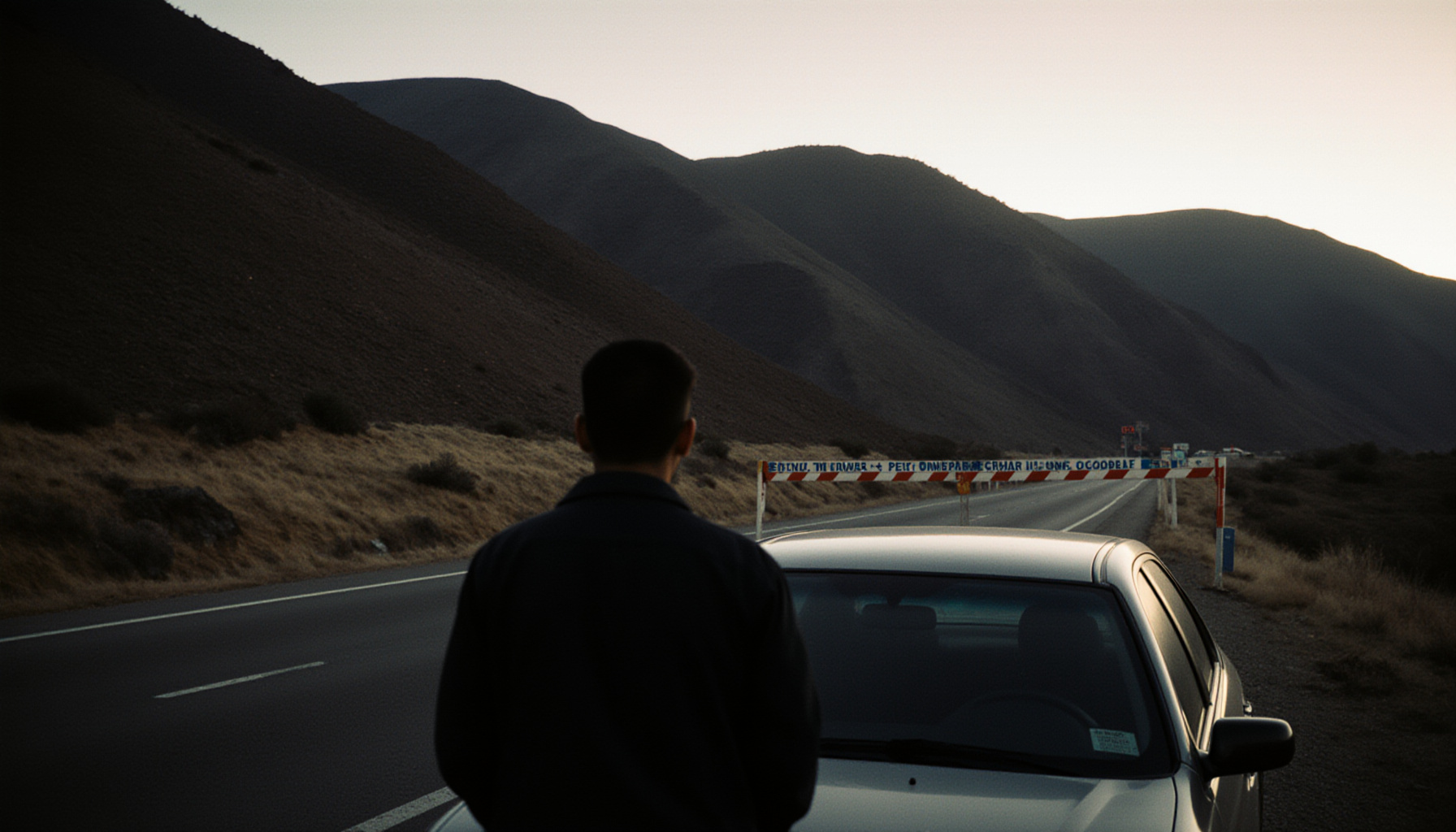
A Peruvian witness says he sensed communication from a craft's occupants, then was detained and threatened. How does that weigh against official UAP releases?
Peru UFO witness Jonathan Weygardt has described an encounter in which he says he sensed communication from the occupants of a craft, and was afterward detained and threatened. The account, shared in a video interview, is the kind of first-person testimony that dominates the UFO field. It also arrives in the same news cycle as a new Pentagon document release and fresh claims from a former Navy official, which makes it a useful case study in how different kinds of UAP evidence should be weighed.
Based on the available summary, Weygardt describes two things. The first is an impression of communication coming from the craft's occupants. The second is a later sequence in which he says he was detained and threatened. The material provided does not say who held him, where he was held, or what was said. It also includes no corroborating documents, physical traces or independent witnesses. Those gaps matter, and we are not filling them in.
Accounts that combine contact with detention and threats follow a long-running pattern in UFO lore. That doesn't make them false. It does mean they rest almost entirely on a single person's memory and credibility. A perceived communication, by its nature, cannot be recorded or measured by anyone else. The detention and threat portion is more testable in principle, since it involves other people, places and possibly records. Whether anyone has followed up on those details is not something this reporting establishes.
The contrast with the other stories is instructive. The Pentagon has released a seventh batch of declassified UAP files through its PURSUE system. The documents are available at WAR.GOV/UFO, and more releases are planned. Whatever any individual file contains, the format is different from a personal narrative. Documents can be read by anyone, compared against one another, checked for provenance and revisited as new batches appear. Even when a file is ambiguous or thinly sourced, it is a fixed artifact that the public can scrutinize.
Former Navy official Tim Gallaudet sits somewhere in between. He claims the US has recovered more than a dozen UFO craft. His background gives the statement more weight than an anonymous post would carry. But the coverage describes expert commentary on how such claims might be verified, which is the key point: a claim from a credentialed person is still a claim until records, physical evidence or additional named sources back it up.
Two other items show how UFO narratives are being framed beyond evidence. One podcast links the Book of Enoch and the biblical Watchers to modern encounters, approaching ancient texts through both faith and critical analysis. Another features British barrister Jonathan Caplan discussing alleged Royal Family UFO investigations, Majestic 12 documents and purported CIA crash retrievals. These are interpretive or historical claims, and the summaries do not indicate that they come with new verification. They show how readily encounter stories attach to older religious frameworks and to long-circulated document controversies.
The useful question for any of these stories is not whether it is exciting, but what could be checked, and by whom.
Taken together, the stories show a field split between a slowly growing public record and a large body of narrative that cannot easily be tested. Weygardt's account may be sincere, and detention or threats are the sort of claims that could in principle leave a trail. Until details emerge, it belongs in the category of unverified testimony. The Pentagon's rolling releases, by contrast, give researchers and journalists something concrete to work through, and any claim about recovered craft or secret investigations will ultimately be measured against that kind of record.
For readers, the practical approach is to ask of each claim what kind of evidence it offers, whether it can be independently examined, and whether the person making it has named sources or documents. On those terms, the Peru account is a story worth following for follow-up, not yet one that can be treated as established.
Originally published by
Editorial Desk
Article ID
#2337
Join the discussion about this UFO/UAP story!
18 hours ago • 28 views

1 day ago • 31 views
1 day ago • 40 views

2 days ago • 45 views
Loading comments...
No comments yet. Be the first to share your thoughts!