Jay Stratton Details Non-Human Entity Encounter on Hannit...
19 hours ago • 16 views
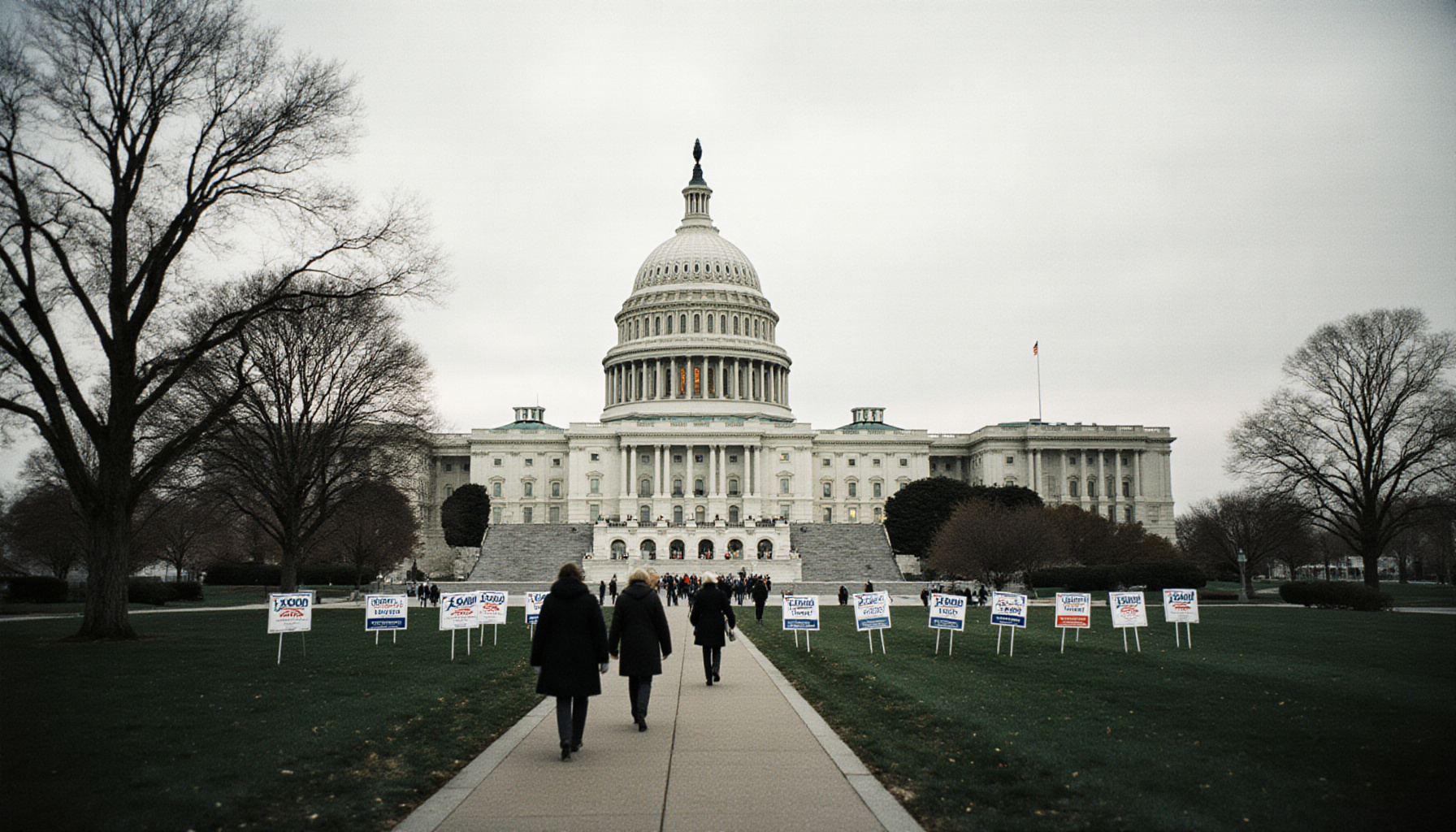
Dolan looks at how the midterms may shape UAP transparency, while other recent stories show why records, sourcing and verification still matter.
Whether the U.S. government becomes more open about unidentified anomalous phenomena may depend on the midterm elections as much as on any new sighting. In a recent video, Dolan examines how the midterms could influence UAP transparency, looking at the legislative hurdles and political dynamics that shape disclosure. The summary doesn't say how any particular race or bill will turn out, and this article doesn't claim to know. But the framing is useful: disclosure is a political process, and it runs on committee calendars, coalitions and priorities.
A new Congress changes who sits on oversight committees, which issues get floor time, and how much political appetite exists for pressing agencies for records. Even a popular idea has to compete with other business. That is the core of the "legislative hurdles" Dolan describes. Transparency efforts need sponsors, procedural openings and sustained attention, and those can shift after an election even when public interest stays steady.
For readers, the practical point is to separate two things that often get blurred: political willingness to demand information, and the existence of the information itself. A more receptive Congress can only compel what agencies actually hold, and the other stories in this week's coverage show how contested that second part can be.
Consider the questions around documentation. CDR David Fravor has discussed the radar recording from the USS Nimitz UAP encounter and where it is now, addressing questions about what records exist. The summary labels the encounter as 2015, though it is widely reported as having taken place in 2004, so the details are worth checking against the full discussion. Either way, a missing or unlocated recording is the kind of gap that transparency legislation is meant to address. Without a clear chain of custody, the public record leans on testimony.
Ralph Blumenthal's account of how the 2017 New York Times Pentagon UFO story came together points the same way. He credits timing, sources and reporting relationships. That is a reminder that much of what the public knows about modern UAP policy came out through journalism and personal relationships, not through systematic official release. A stronger statutory framework would, in principle, make that kind of breakthrough less dependent on luck.
Meanwhile, new cases keep appearing without official explanation:
Neither case is resolved by the material available, and neither should be treated as proof of anything exotic. Multiple videos of the Tehran object are a good start, but they don't establish what it was. The Australian circle is a physical trace, but a trace needs documentation and comparison before it supports any conclusion.
The common thread is the quality of the record. Lawmakers can influence whether agencies preserve, locate and release data such as radar files, and whether witnesses and journalists have a formal channel instead of an informal one. Whether the next Congress pursues that is the open question Dolan raises. Until then, the sensible approach for readers is to hold sightings and political forecasts to the same standard: note what is documented, what is claimed, and what is still unknown.
Originally published by
Editorial Desk
Article ID
#2246
Join the discussion about this UFO/UAP story!
19 hours ago • 16 views
1 day ago • 14 views
1 day ago • 36 views

2 days ago • 31 views
Loading comments...
No comments yet. Be the first to share your thoughts!