James Fox's Pentagon SCIF Visit and AARO Meeting Meet Tru...
7 hours ago • 10 views

Richard Dolan revisits John Keel's hitchhiker effect, while Trump's 60 Minutes remarks and a Pentagon SCIF visit show how little the public can verify.
Richard Dolan has returned to one of the stranger corners of UFO literature: John Keel's documentation of the "hitchhiker effect," the claim that odd phenomena seem to follow witnesses long after an initial encounter. Set beside this week's other UAP headlines, the idea is a useful lens. Much of the current conversation is about who has access to information, and who carries the consequences of it.
According to the reporting, Dolan examines Keel's work on cases in which strange events continue to attach themselves to people who have had a UFO experience. The summary available to us is brief, so it is worth being careful about what is and is not being claimed. The core proposition is that the encounter is not always a single, closed event. For some witnesses, Keel argued, unusual phenomena persist or recur well after the original sighting.
This is a claim from the experiential, anecdotal side of the field. It rests on witness testimony and Keel's case collection rather than on instrumented data, and nothing in the material provided offers independent verification. It should be read as a historical hypothesis, one that shaped how a generation of researchers thought about witnesses, rather than as established fact. Its value for a modern reader lies in the question it raises: what happens to people after they report something, and how should researchers handle accounts that are hard to test?
The contrast with the institutional news is stark. Trump told 60 Minutes that he has seen no evidence of a UFO reverse engineering program and had not even heard of it. That is a notable statement, but it is a statement of personal knowledge, not a finding. It does not settle whether such programs exist, and the report itself frames it as raising questions about government UAP transparency.
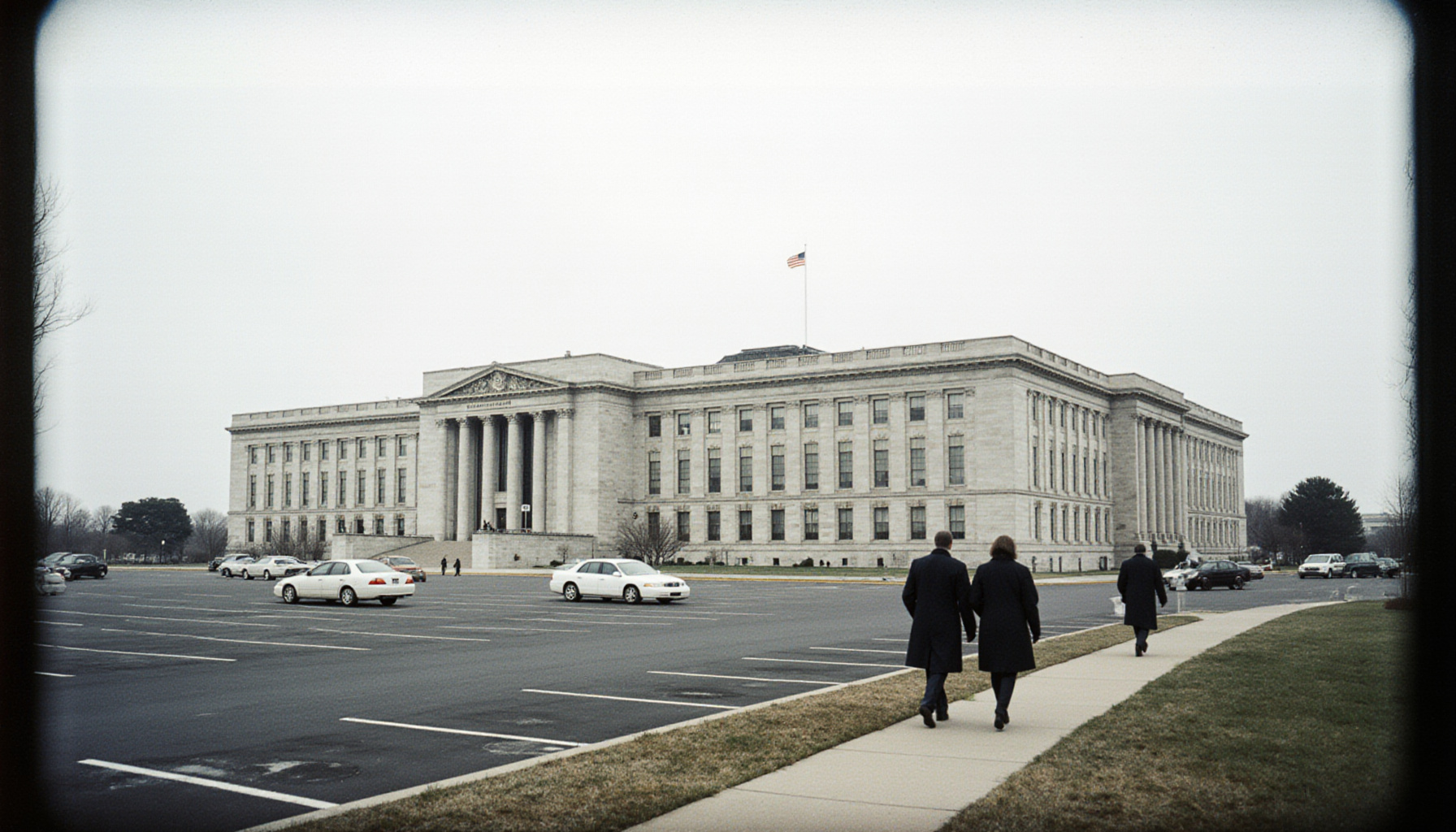
Meanwhile, filmmaker James Fox described visiting a classified Pentagon SCIF (a secure compartmented information facility) and meeting leadership of AARO, the Pentagon's UAP office. By the account provided, the details of that visit remain restricted. The public therefore learns that a meeting took place, but not what was discussed or shown. That is a fair illustration of the current state of play: access is real for some, but what comes out of it is limited by classification.
A separate analysis asks whether Elon Musk might have access to classified UAP information through his government contracts and aerospace connections. The framing is a question, and the material gives no evidence that he does. It is best treated as speculation about how proximity to defense and space work might, in theory, intersect with sensitive programs.
Taken as a set, the items show two different problems of knowledge.
One side of the field has stories it cannot prove; the other has access it cannot describe.
That gap is the real story. The summaries available do not detail what was said in Stockholm or what the Reality Transparency Act would require, so those points warrant follow-up from primary sources. For now, readers are best served by separating categories: historical hypotheses like Keel's, personal statements like Trump's, and restricted-access accounts like Fox's each carry different weight. Until documents or data enter the public record, the debate will continue to turn on whom to trust rather than on what can be shown.
Originally published by
Editorial Desk
Article ID
#2311
Join the discussion about this UFO/UAP story!
7 hours ago • 10 views

1 day ago • 25 views
1 day ago • 26 views
2 days ago • 33 views
Loading comments...
No comments yet. Be the first to share your thoughts!