
Kristian Harloff's Kickstarter Seeks 7,800 Backers for 'O...
19 hours ago • 4 views
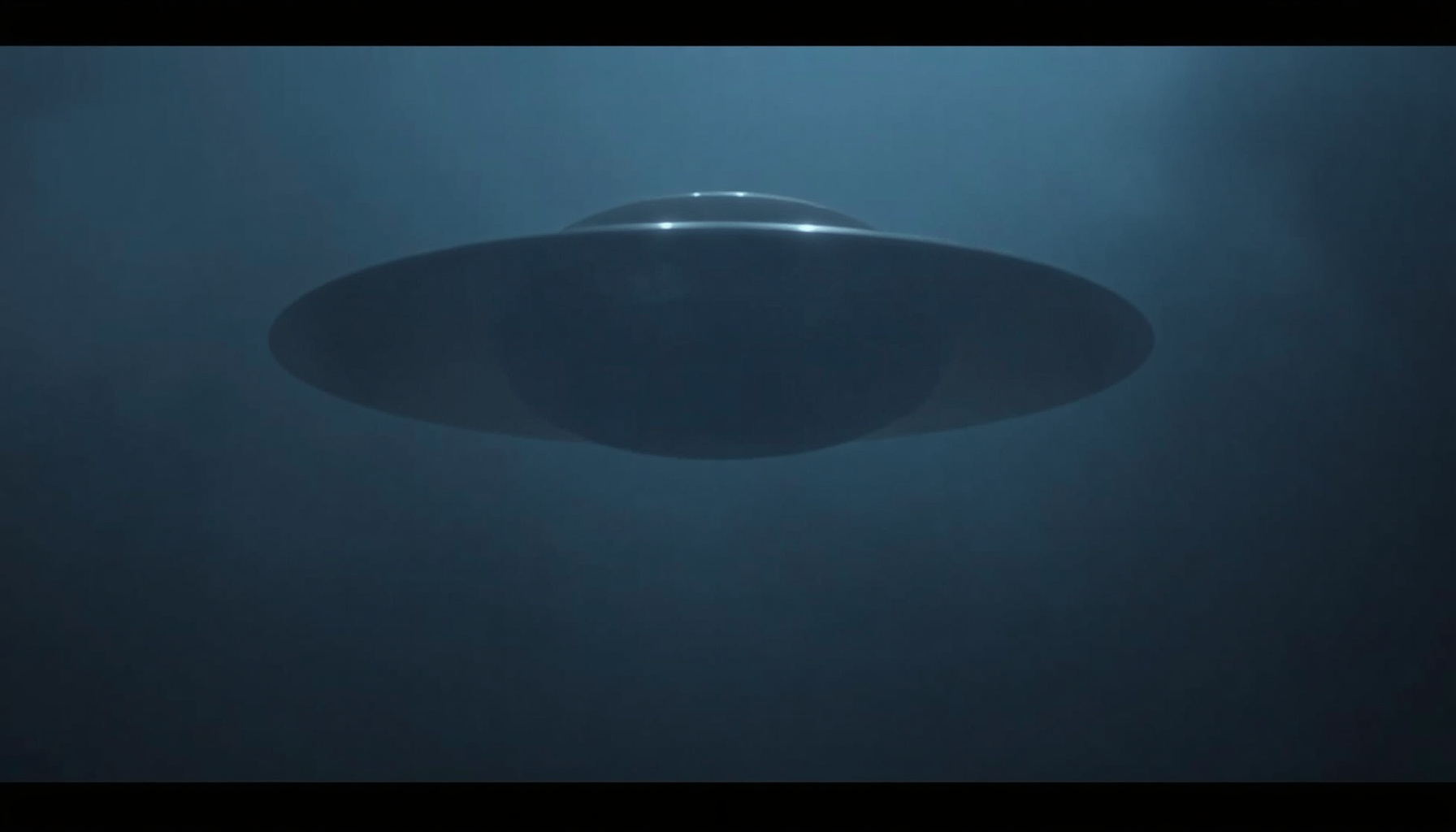
Steven Greer argues some celebrated sightings may be classified human technology, a claim that sits oddly alongside this week's disclosure ultimatums and cha...
Dr. Steven Greer, long one of the best-known advocates of the extraterrestrial hypothesis, is now arguing that some of the most famous UFO sightings may not be extraterrestrial at all. In a video discussion titled "Government UFOs? Exploring Greer's Dual-Reality Theory," he proposes that certain well-known cases stem from classified military technology. Only a summary of the discussion is available here, so the specific cases he names and the evidence he offers cannot be assessed. The framing itself is worth examining, because it cuts against the way many people expect disclosure advocates to argue.
As described, the theory holds that two different phenomena may be getting merged under a single label. One is the possibility of non-human intelligence. The other is the possibility that secret human-built craft, kept out of public view, account for some of the sightings the public associates with visitors from elsewhere. Greer's framing, as summarized, is that the narrative has been blurred and that some famous sightings belong in the second category.
That is a notable emphasis from a figure associated with the first. It also touches a long-standing problem for anyone trying to interpret UAP reports: an unexplained object is not the same as an extraterrestrial one. A sighting of something unfamiliar may involve an unacknowledged government program, a misidentified conventional aircraft, or something else entirely. The theory, in this telling, asks viewers to keep those possibilities separate rather than assuming every anomaly points the same way.
It is important to be clear about what this is. The coverage describes a proposal and an argument, not a documented finding. Nothing in the material supplied establishes which sightings, if any, are secret technology, and the theory should be treated as a hypothesis from a prominent advocate.
The same stretch of coverage shows how fragmented the field is. Several other items point in different directions:
Read together, these items show the community pursuing at least three tracks at once: pressure on government for transparency, field-style investigation of individual cases, and interpretive debate over what the phenomenon is. Greer's theory sits in that third track, and it has implications for the other two.
If disclosure means acknowledging non-human intelligence, an ultimatum like Corbell's has one meaning. If part of what is hidden is advanced human technology, the demand for transparency concerns something different: classified programs and what the government has kept from the public. Those are not mutually exclusive, but they point to different questions for officials and different standards of proof for researchers.
The New Zealand case illustrates the practical side. A chase involving an aircraft with a crew of reporters is the kind of event where video, audio and witness testimony can be tested. Investigators would need to establish the aircraft's position, what the recordings actually show, and whether conventional explanations hold up. A dual-reality lens would add one more question: whether the object could be a terrestrial platform that the witnesses had no way of identifying.
An unexplained object is not the same as an extraterrestrial one, and a theory that insists on that distinction deserves scrutiny from both believers and skeptics.
For now, Greer's proposal is best understood as a prompt rather than a conclusion. It invites researchers to state clearly what a given case would need to show before it is attributed to either source. Without named cases and documentation, the idea remains an argument, but one that may shape how audiences weigh the next disclosure demand or chase-case video.
Originally published by
Editorial Desk
Article ID
#2117
Join the discussion about this UFO/UAP story!
19 hours ago • 4 views
1 day ago • 6 views

1 day ago • 9 views

2 days ago • 11 views
Loading comments...
No comments yet. Be the first to share your thoughts!